Epoxy Flooring in Kenosha, Built on a Tested Slab

Garage, basement and commercial floors ground open, moisture tested and coated to a written system you can check against what went down.

Kenosha Epoxy Flooring brings 20+ years of concrete floor work to garages, basements and commercial buildings in Kenosha, WI. We install epoxy garage floors, polyaspartic coatings, flake and metallic systems, polished concrete and commercial floors for warehouses, kitchens and shops, and every one of them starts with the same step: opening the slab mechanically and testing it before anything is applied.

A floor coating is only as good as the concrete under it and the preparation that went into it. We grind or shot blast instead of acid etching, we test for moisture as a written line item, and we read the cracks, joints and old coatings before we quote. When a slab needs repair or replacement before it can be coated, we tell you that first.

Our proposals name the product, the system build and the finished thickness, so what was quoted can be checked against what went down. Homeowners get a written contract before any deposit is taken, and commercial clients get a schedule built around the hours their building has to keep running.

Get Your Free Quote

Fast response • No obligation

So we can reach you about your request.

So we can send you a confirmation after you submit this inquiry form.

  • 20+ Years on Concrete
  • Moisture Tested First
  • Written System Proposals

What we do

Our Services

Epoxy flooring and concrete coatings for Kenosha, WI

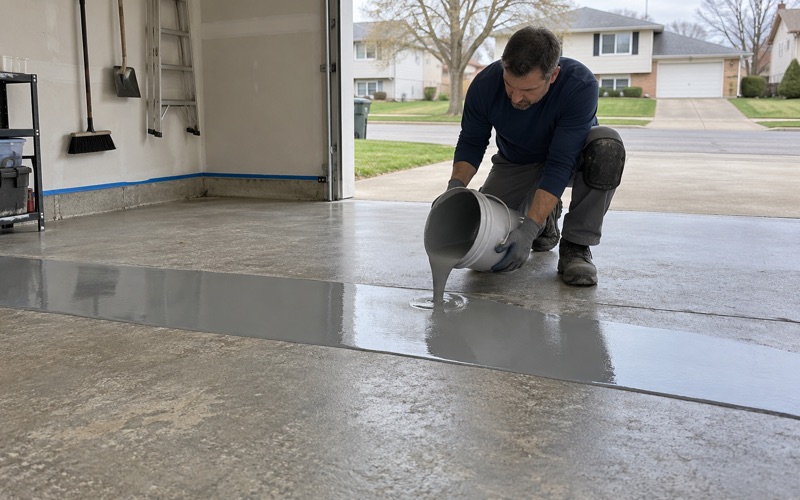
A ribbon of gray epoxy base coat poured onto a ground garage slab in a Kenosha split-level, ready to be spread.

Epoxy Garage Floor

Ground, moisture-tested epoxy garage floors built to handle Kenosha road salt, brine and hot tires, with the full system named in writing.

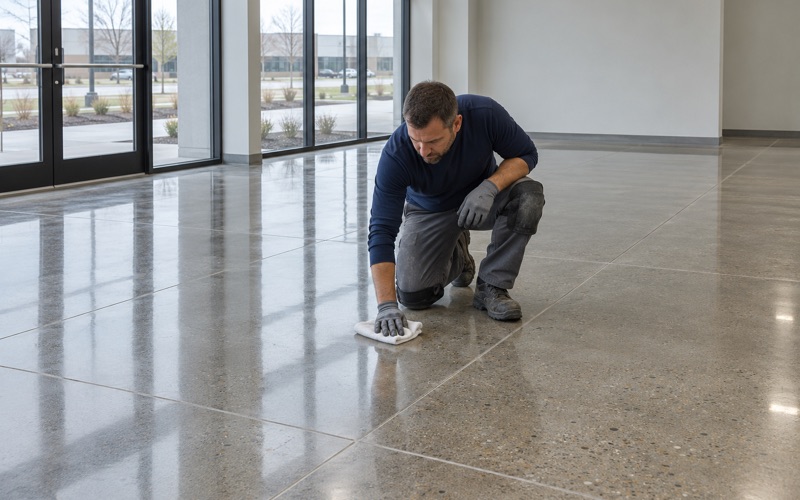
A final buff on a polished concrete floor in a new Kenosha office and lab building.

Polished Concrete Floors

Polished concrete for Kenosha warehouses, showrooms and homes, ground in stages and densified for a hard, low-maintenance floor.

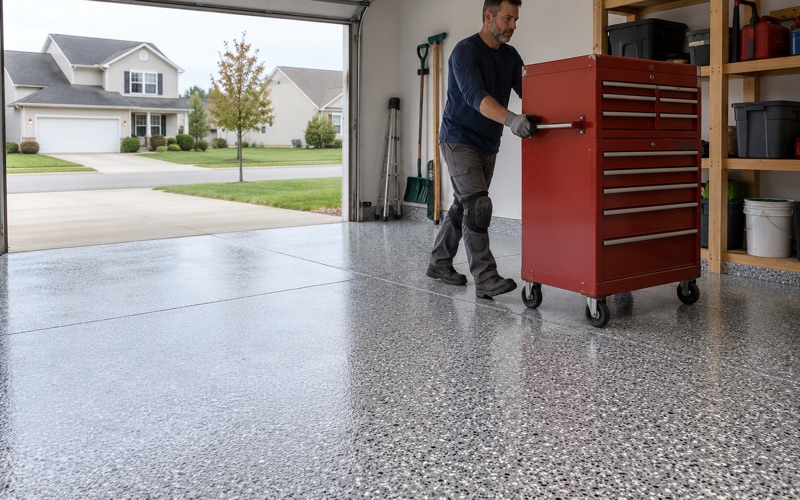
A rolling tool chest wheeled back onto a same-day polyaspartic garage floor in a Kenosha subdivision.

Polyaspartic Floor Coating

Fast-curing polyaspartic floor coatings for Kenosha garages and commercial floors, resistant to UV ambering, salt and hot tire pickup.

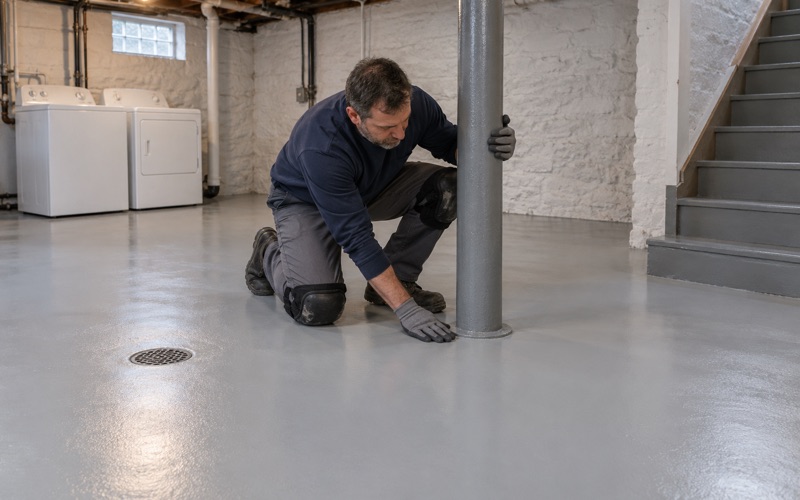
A coated basement floor in a Kenosha bungalow, the coating carried neatly around the steel support column.

Basement Floor Epoxy

Basement floor epoxy for Kenosha homes, built on a moisture-tested, ground slab with drains, sump pits and wall edges detailed properly.

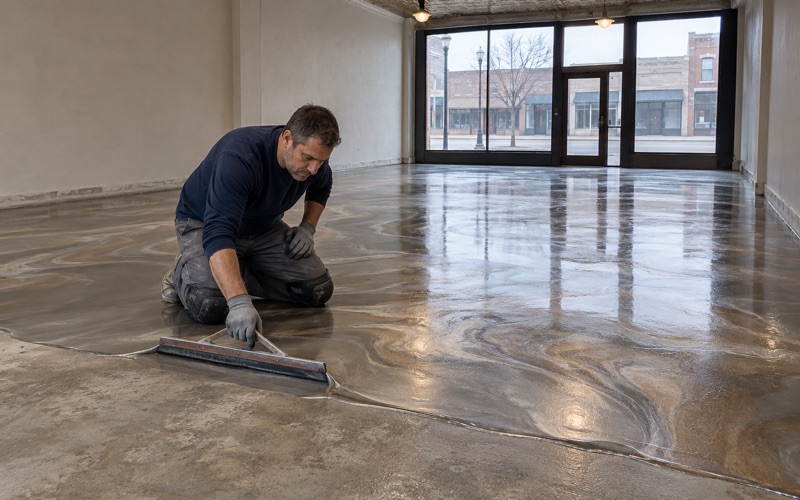
Metallic epoxy pushed across the floor of a downtown Kenosha storefront, pearl and bronze pigment swirling as it spreads.

Metallic Epoxy Floor

Marbled metallic epoxy floors for Kenosha homes, showrooms and commercial spaces, built on a flat, ground and moisture-tested slab.

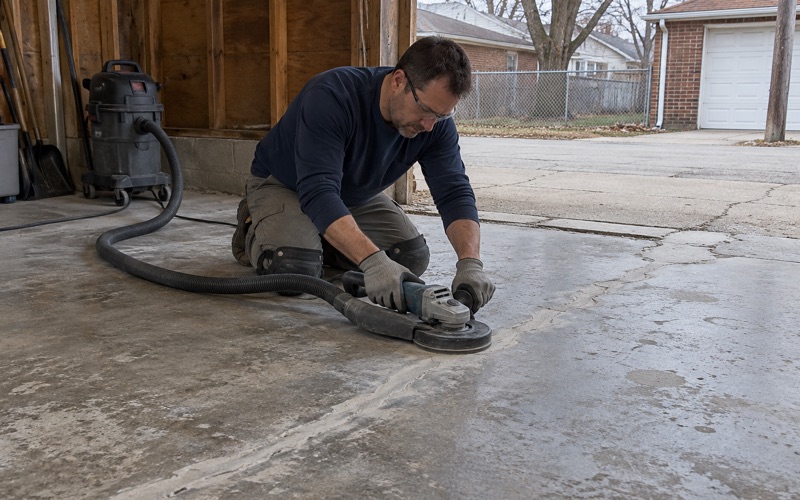
A cured crack repair ground flush on an old Kenosha garage slab before coating.

Concrete Floor Repair

Crack, spall, joint and scaling repair for Kenosha concrete floors, with an honest call on when a slab needs replacing instead.

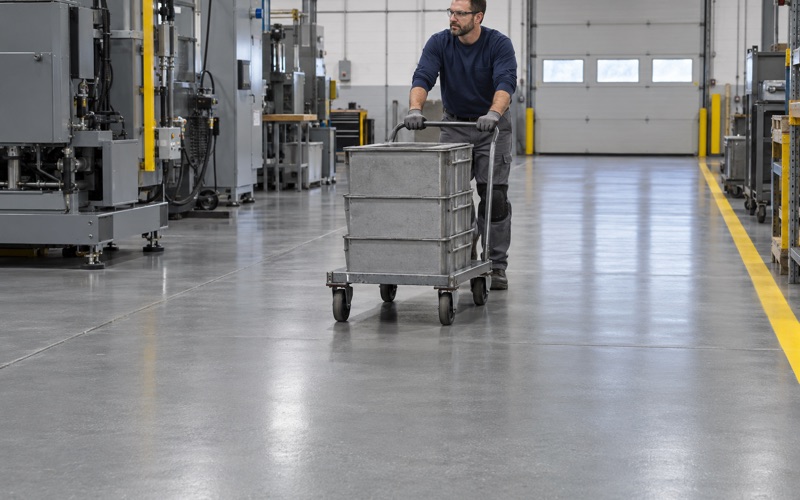
A loaded cart rolled across a new coated assembly floor in a Kenosha industrial building.

Commercial Epoxy Flooring

Commercial epoxy floors for Kenosha warehouses, plants, shops and service bays, with joints filled first and work scheduled around operations.

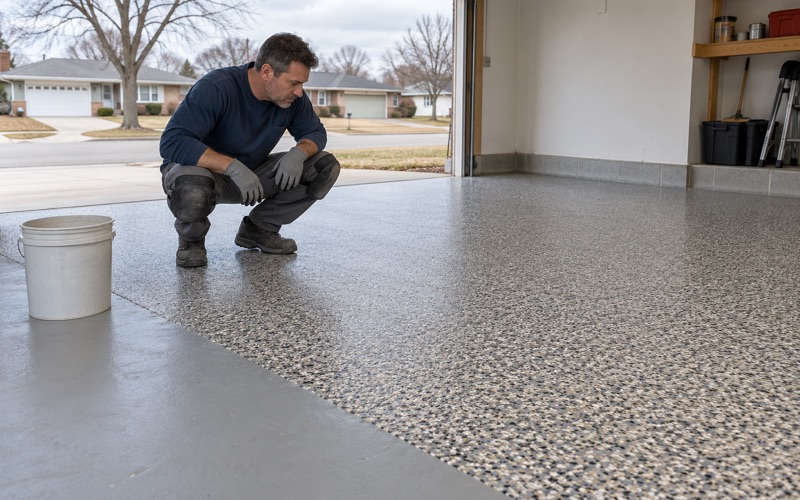
A full-broadcast flake floor inspected at its working edge in a Kenosha ranch garage.

Flake Epoxy Floor

Full-broadcast vinyl flake epoxy floors for Kenosha garages, basements and shops, sealed under a clear topcoat that handles salt and hot tires.

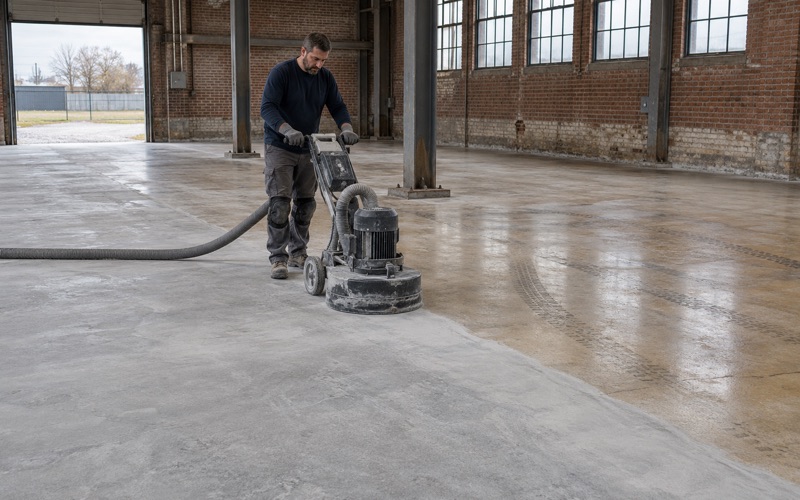
A walk-behind planetary grinder opening up an old sealed slab in a Kenosha industrial building, half the floor already ground.

Concrete Grinding

Diamond grinding and shot blasting for Kenosha concrete floors: coating and mastic removal, leveling and surface profiling before a new floor.

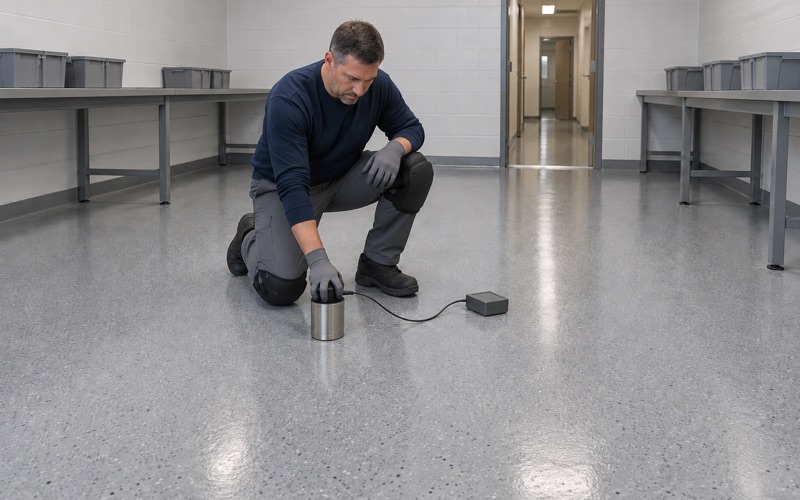
A static-dissipative floor tested with a heavy cylindrical electrode in a Kenosha electronics assembly room.

ESD Flooring

Static-dissipative and conductive ESD epoxy floors for Kenosha electronics, lab and data spaces, grounded and tested after installation.

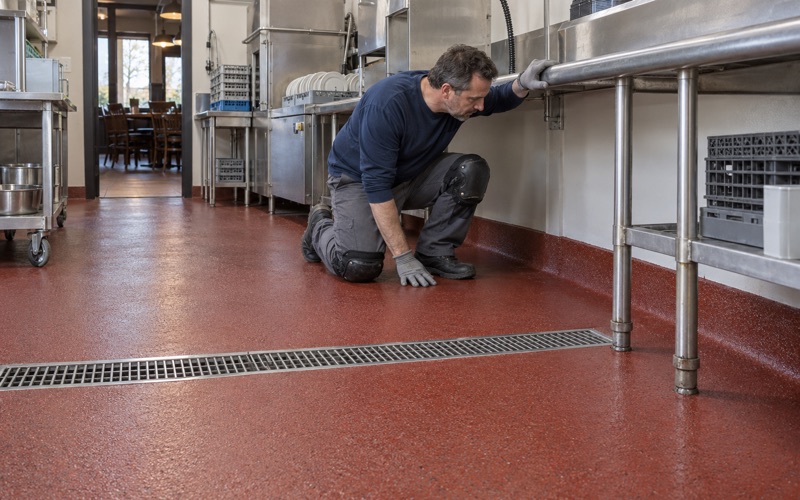
A red quartz urethane cement floor with a coved base and trench drain in the dish area of a Kenosha restaurant kitchen.

Commercial Kitchen Flooring

Seamless urethane cement and resin floors for Kenosha restaurant and institutional kitchens, coved at the walls and built for hot washdown.

Two Decades on Kenosha Concrete

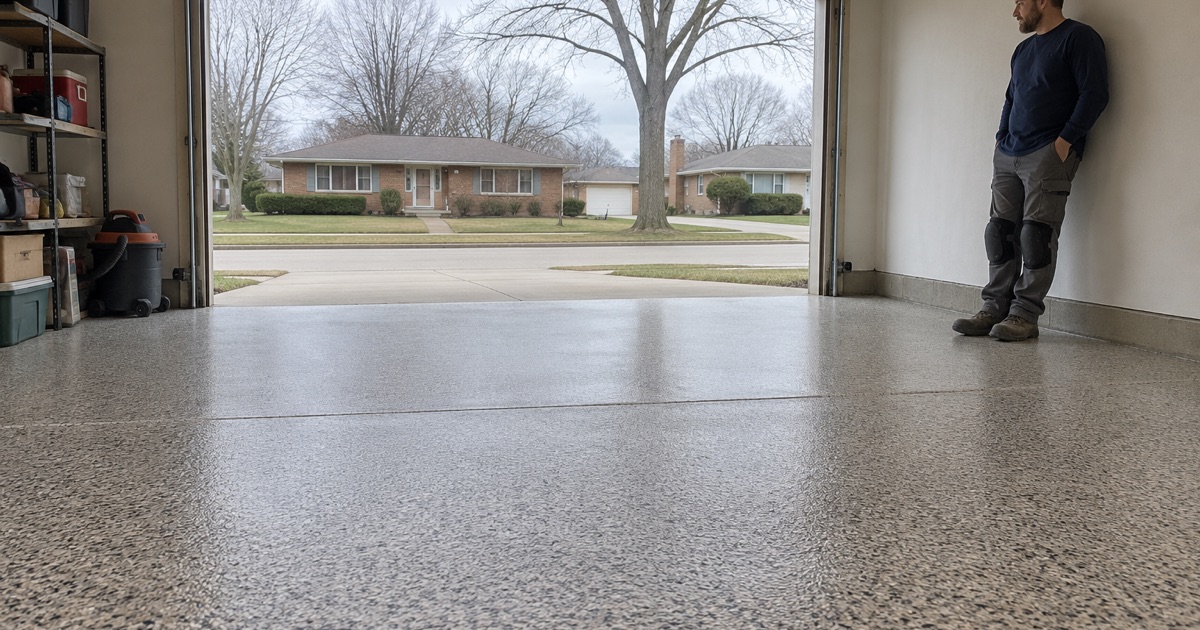
A finished flake floor in the attached garage of a 1950s Kenosha brick ranch, the door raised to a quiet street of maples.

20+ Years of Floor Coating Work

We have spent more than twenty years grinding, repairing and coating concrete floors. That time is where our habits come from: testing moisture before coating, refusing to acid etch, and naming the exact system in writing. It is also why we can usually tell from the first look at a slab what it will need.

Why Choose Kenosha Epoxy Flooring

Ground, Never Etched

Every slab we coat is opened with a diamond grinder or shot blaster to a measured surface profile, so the epoxy bonds to sound concrete rather than to the weak top skin and old sealer that an acid wash leaves behind and that peels within a season.

Moisture Tested in Writing

No garage or basement floor gets a coating until moisture testing has been done and written into the scope. Wisconsin does not require a vapor retarder under an unconditioned attached garage slab, so a dry-looking floor can still push vapor up, and we test rather than assume.

Built for Salt Brine

Kenosha winters put road salt and calcium chloride brine on every tire that pulls into a garage, so our garage systems use topcoats chosen to resist chloride and hot tire pickup rather than the thin single-coat finishes that soften and lift by the second spring.

Cured to the Dew Point

Never do we schedule a cure by the calendar alone. We read slab temperature and the dew point spread at the surface, and when an unheated garage is too cold to cure properly we say it should wait for spring rather than lay down a coating that blushes and stays soft.

Both Sides of the Line

Our service area crosses into Illinois, where 35 Ill. Adm. Code Part 223 limits the VOC content of the coating an installer may apply. We pick products for the side of the state line the job sits on, so an Illinois floor never gets a coating that is only legal in Wisconsin.

The Garage Floor, Start to Finish

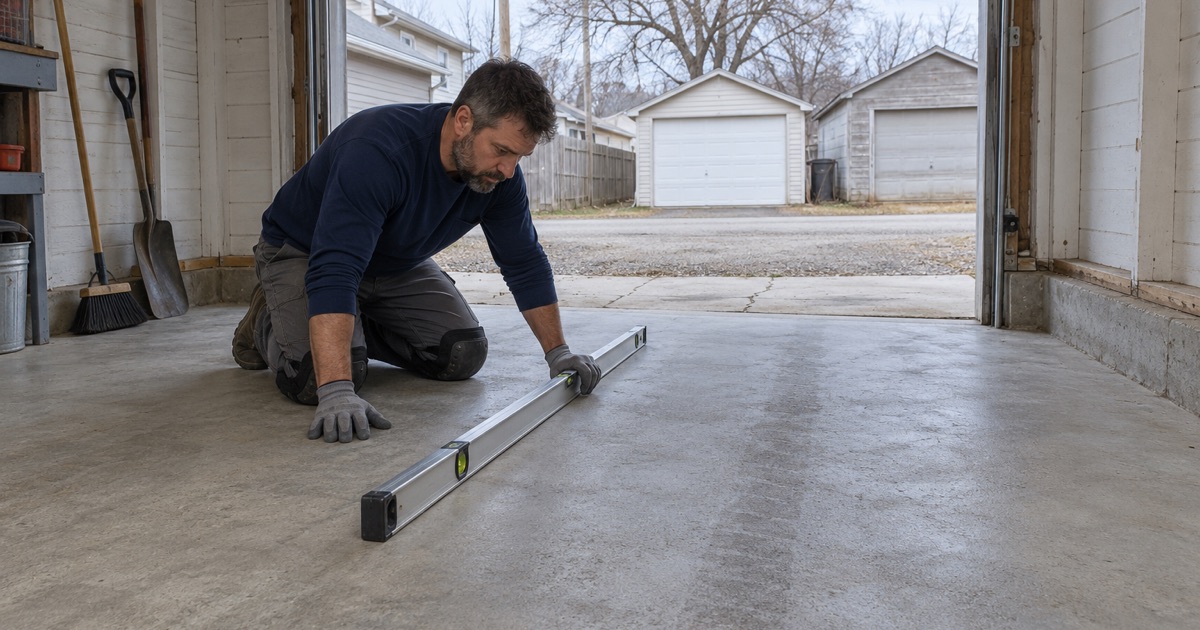
A long level laid on a ground Kenosha garage slab to read its fall toward the overhead door before any coating goes down.

The Epoxy Garage Floor Process From First Look to Parking Day

An epoxy garage floor job starts with a walk of the slab: cracks, joints, old paint, drains and how water leaves the room. Then comes grinding, repairs, moisture testing, the base coat, any flake or quartz broadcast and the topcoat. We give you the walk-on and drive-on times before we begin.

Diamond Grinding a Garage Slab Open

A coating laid over sealed, painted or smooth troweled concrete has nothing to grip and lets go in sheets. We grind the slab to an ICRI concrete surface profile that matches the system, usually a CSP 2 or 3 for a garage coating, and vacuum the dust as we go.

Moisture Testing Under an Attached Garage

Wisconsin’s dwelling code requires a vapor retarder under a home’s floor slab but not under the slab of an unconditioned attached garage, under SPS 322.38. That means many garage slabs have no sheet beneath them, so we test before we coat and pick a primer to match the reading.

What the Dwelling Code Asks of a Garage Floor

SPS 321.203 sets the garage floor itself: noncombustible, impermeable to petroleum, at least 4 inches thick on granular fill and sloped to the door or a floor drain. Its own note says it does not require sealing the concrete, so a coating is your choice, and we treat it as protection rather than compliance.

Reading the Cracks Before a Garage Coating

Hairline shrinkage cracks are normal and we fill them before coating. A crack that has opened wide, shifted in height or keeps growing tells us the slab is still moving, and a coating will follow it. When we see that, we say the slab needs repair or replacement before we quote a finish.

Road Salt, Calcium Chloride and Bare Concrete

Rock salt and calcium chloride deicers ride in on tires and sit in puddles on the floor all winter. On bare concrete that brine works into the surface and scales it. A sealed, coated floor keeps the salt on top where it can be squeegeed out to the drain.

Coating a Garage in a Kenosha Winter

Epoxy needs a warm enough slab to cure, and Kenosha’s lakeshore and inland stations average more than 120 freezing nights a year. A heated garage can be coated in January. An unheated one often cannot, and we would rather tell you to wait for spring than install a floor that never cures right.

Hot Tire Pickup and Topcoat Choice

A tire coming off a warm highway softens some coatings and pulls them off the floor when the car parks. Thin, low-solids finishes are the usual victims. We use 100% solids epoxy bases and polyaspartic or polyurea topcoats that hold up under a hot tire.

Store-Bought Epoxy Kits Versus a Professional Floor

A store-bought epoxy kit is mostly a thin water-based coating applied over acid-etched concrete. A professional floor starts with grinding, uses higher-solids materials at a measured thickness and is built in layers. The difference shows up the first winter, when salt and hot tires find the weak spots.

What Moves the Price of an Epoxy Garage Floor

The size of the garage matters less than its condition. Old coatings to remove, crack and joint repair, moisture that calls for a mitigation primer, flake density and topcoat choice are what move the number. We quote after seeing the slab, with each item named.

Coating Warranty Exclusions, Moisture First

Almost every coating warranty excludes failure caused by moisture vapor coming up through the slab. We read the exclusions out before the job is sold, moisture first, so you know what is covered and why we test before we coat.
Basements and the Water Under Them

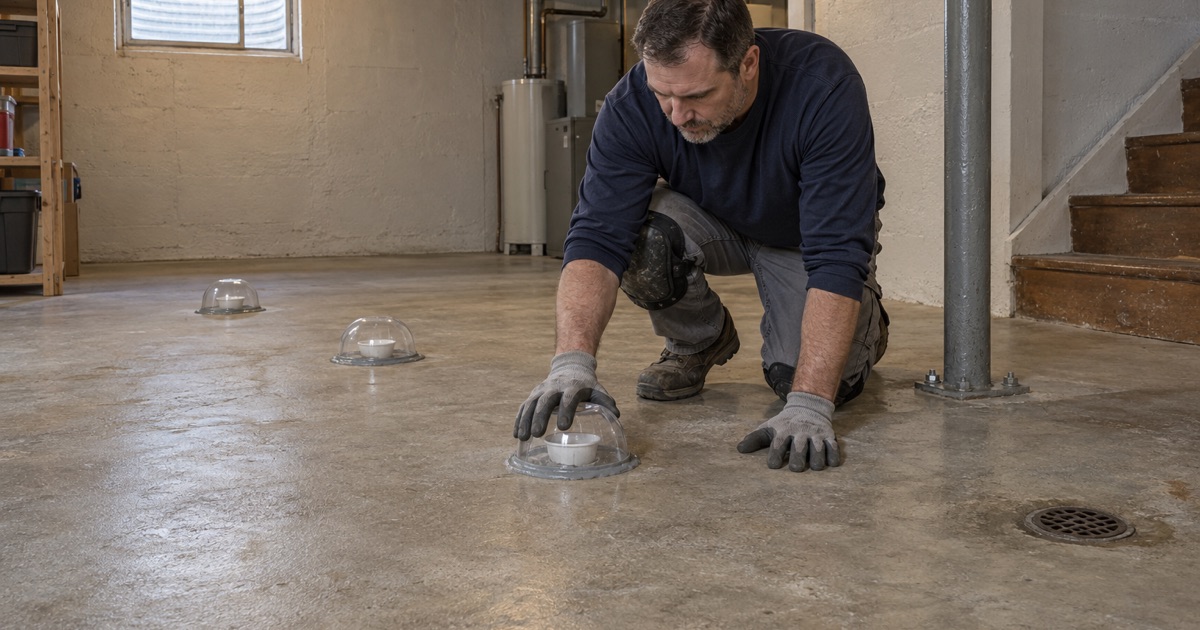
A sealed moisture test dome pressed onto a bare Kenosha basement floor before a coating is quoted.

Basement Floor Epoxy Starts With the Moisture Question

A basement slab sits in the ground, and the ground is rarely dry. Before we coat a basement floor we test it, because the reading decides whether a standard primer will hold or whether the floor needs a moisture-mitigation system first. We do not skip this step to save time.

Hydrostatic Pressure Under a Basement Slab

Groundwater pushing up against the underside of a slab can drive moisture through concrete that looks and feels dry. That pressure is what lifts a coating off in blisters months later. Testing tells us how hard the slab is pushing before any coating goes on.

Efflorescence on a Basement Floor

The white powder on many basement floors is efflorescence, salts carried up by water as it moves through the concrete and left behind when it evaporates. It is a sign of moisture movement, and it has to be ground off and the cause understood before any coating will stay bonded.

Floor Drains, Sump Pits and Basement Edges

Drains, sump pits and the joint where the floor meets the wall are where a basement coating usually fails first. We detail those edges, keep the slope to the drain and stop the coating cleanly at the sump so it can still be serviced.

Coating a Basement After Water Has Come In

If a basement has flooded or taken in water, the slab holds that water long after the surface dries. We let it dry, retest, and fix the source where we can before coating. Sealing a wet slab only traps the problem under a new floor.

Moisture-Mitigation Primers for Damp Slabs

When testing shows more moisture than a standard primer can handle, a moisture-mitigation primer goes down first to hold back vapor. It adds cost and a step, and we only specify it when the numbers call for it, with the reading written into the scope.

Prewar Basements and Decades of Paint

Older Kenosha houses often have basement floors that are thin, patched and painted several times over. Each layer has to come off before a new coating can bond. We grind down to sound concrete, show you what is underneath and quote the repairs before the finish.

Finished Basements, Playrooms and Home Gyms

A coated slab makes a durable base for a playroom, laundry area or home gym, and it cleans easily. For rooms where people stand or exercise, we can add texture for grip, and we talk through mats and rubber flooring that will sit on top.

Radon and Basement Floor Coatings

A floor coating is not radon mitigation, and we do not sell it as one on either side of the state line. Radon reduction is a separate system. If radon is a concern, test for it and talk to a mitigation specialist before or alongside your floor work.

Color, Flake and Finish

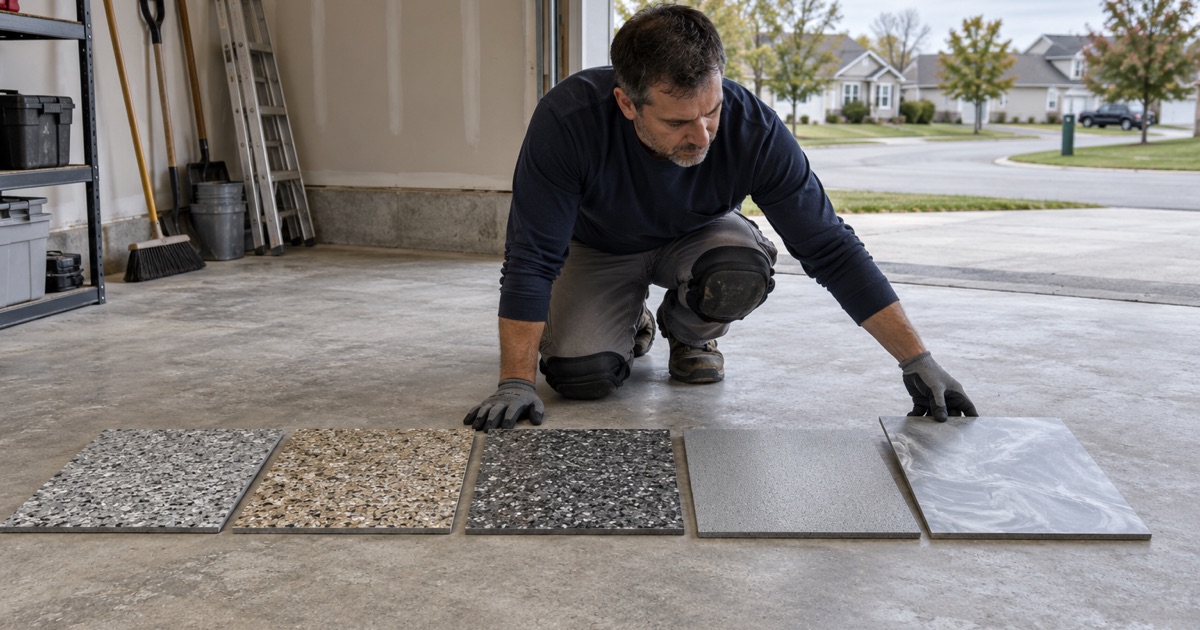
Coated sample boards laid out on a ground Kenosha garage floor so an owner can compare flake, quartz and metallic finishes.

Vinyl Flake Floor Blends and Chip Size

A vinyl flake broadcast hides dust, tire marks and small imperfections in the slab. Chip size and blend change the look: small chips read as a fine speckle, larger ones as a terrazzo-like pattern. Full broadcast floors get a clear topcoat to lock the flake in.

Metallic Epoxy and the Marbled Look

Metallic epoxy floors use pigments that move as the coating is worked, leaving a marbled, three-dimensional finish. No two floors look the same. The finish shows every flaw in the slab, so preparation and a smooth base coat matter even more than on a flake floor.

Polished Concrete and Aggregate Exposure

Polished concrete is the slab itself, ground in stages and hardened with a lithium silicate densifier. How deep we grind decides the look: a cream finish shows little stone, while a deeper cut exposes the aggregate. Each slab polishes a little differently.

Gloss, Satin and Matte Topcoats

High gloss shows off color but also shows dust, scratches and tire marks. Satin and matte finishes hide daily wear better and read as less slippery. We help you choose the sheen based on how the room is used rather than how it looks on a sample board.

Quartz Broadcast for Color and Grip

Quartz aggregate broadcast into the coating gives color and slip resistance in the same step. It suits wet areas, ramps, commercial kitchens and locker rooms. The texture can be tuned by how much topcoat goes over the quartz.

Solid Color Epoxy Coatings

A solid color coating is the simplest finish and often the right one for a workshop, utility room or warehouse aisle. It is easy to clean, easy to touch up and makes painted lines and safety markings stand out.

Ultraviolet Light and Ambering

Many epoxies yellow, or amber, when exposed to sunlight through an open garage door or window. Polyaspartic and polyurea topcoats resist that change, which is why we use them where a floor sees daylight.

Saw-Cut Lines, Borders and Inlaid Logos

Saw-cut lines can divide a floor into a pattern, and borders can frame a showroom or lobby. Logos can be inlaid during the build. We plan these in the proposal so the layout is agreed before any coating goes down.

Warehouses, Food Plants, Kitchens and Shop Floors

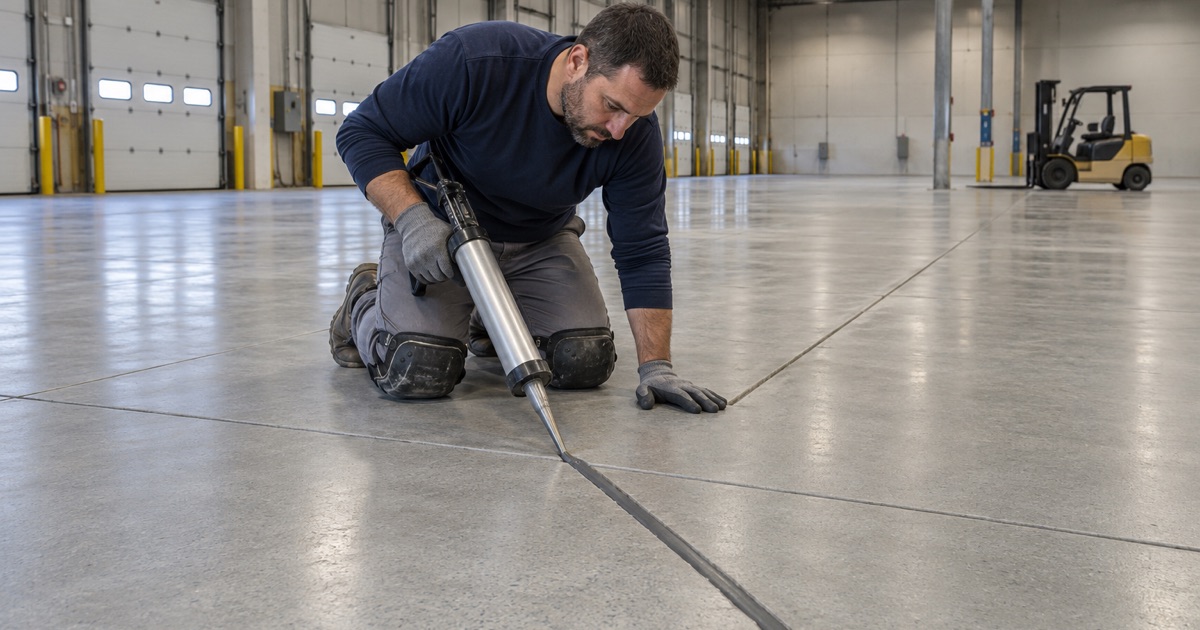
Semirigid filler run into a saw-cut joint on the coated floor of a Kenosha distribution building along I-94.

Commercial Epoxy Flooring Versus Residential Work

Commercial floors carry heavier loads, more traffic and tighter schedules than a home garage. They often need thicker systems, joint fill, chemical resistance and phased work. We plan the job around production, inspections and access before we quote.

Filling Warehouse Joints Along I-94

Kenosha’s freeway belt holds distribution floors measured in hundreds of thousands of square feet, cut with joints that forklifts cross all day. We fill those joints with a semirigid filler before any coating goes over them, so wheels do not break the joint edges.

Food and Candy Plant Floors Under ATCP 70

Wisconsin’s food processing plant rule, ATCP 70, asks for floors that are smooth, durable and easy to clean. Food plants need coatings that stand up to sanitizers, hot water and traffic without trapping residue. We match the system to the products and cleaning schedule.

Commercial Kitchen Floors, Coving and Urethane Cement

New and remodeled kitchens in the county go through Kenosha County Public Health plan review, and the Wisconsin Food Code follows FDA guidance on coved floor and wall junctures. Where hot washdown would take an epoxy off, we use urethane cement instead.

Hospital, Clinic and Campus Floors

Healthcare and campus buildings cannot close for long, and their floors see carts, cleaning chemicals and constant foot traffic. We phase the work, use fast-cure systems where they fit and keep dust contained so other areas stay open.

Machine Shop and Repair Bay Floors

Oil, coolant, dropped parts and anchored machines are hard on a floor. We specify chemical-resistant systems, plan around equipment that cannot move, and seal around anchors so fluids do not work under the coating.

Marina Service and Boat Storage Floors

Boat storage and service buildings see trailers, fuel, solvents and winter salt. A coated floor makes spills easier to contain and clean. We detail drains and doors so water does not sit at the edges.

Static-Dissipative and ESD Flooring

Electronics and sensitive equipment need floors that bleed static away rather than store it. Static-dissipative and ESD floors are built to a specified electrical resistance range, with grounding points planned into the layout and testing at the end.

Cooler and Freezer Floors

Cold rooms need coatings that tolerate low temperatures and the thermal shock of washdown. Installing them often means coordinating with the refrigeration schedule. We pick systems rated for the room temperature and plan the cure around it.

Wisconsin and Illinois VOC Rules

Illinois limits the VOC content of coatings an installer may apply, under 35 Ill. Adm. Code Part 223. Wisconsin relies on the federal architectural coatings rule, 40 CFR 59 Subpart D, which binds the manufacturer. We choose products to fit the rule for the job’s location.

Overnight and Weekend Floor Work

Many buildings cannot stop for a floor. We schedule warehouse, plant, kitchen and shop work around operating hours, including overnight and weekend windows, and stage areas so the building keeps running while the floor is done.

Areas We Serve

Kenosha Epoxy Flooring provides epoxy-flooring throughout the greater Kenosha area, with the same crews and the same standards on every job.

Good to know

Frequently Asked Questions

How much does an epoxy floor cost in Kenosha?

Price follows the slab more than the square footage. Grinding, crack and joint repair, a moisture-mitigation primer if testing calls for one, the number of coats and the topcoat chemistry all move the number. We quote after seeing the floor, and the proposal names the product, the system build and the finished thickness so you can compare bids line by line.

How long does a garage floor job take?

Most two-car garages run over a few days: one for grinding and repairs, then the coats, then cure time before you drive on it. The calendar is set by slab temperature and the dew point spread at the surface, so a cold or damp stretch can add a day. We tell you the walk-on and drive-on times before we start.

Do you need a license to install epoxy flooring in Wisconsin?

Wisconsin issues no license for floor coating work. What can apply is a local permit, which varies by city and village, so we confirm with the local inspector whether a job needs one before it goes on the schedule. On the Illinois side the rules on the product itself are stricter, which we cover in the proposal.

Why do you grind instead of acid etching?

Acid etching leaves a thin, uneven profile and residue that can weaken the bond, and it does little to old sealers. A diamond grinder or shot blaster removes the weak top layer and opens the surface to a measurable ICRI concrete surface profile, which is what a coating actually grips.

What moisture tests do you run?

Depending on the slab, we use the ASTM D4263 plastic sheet test as a quick screen, ASTM F1869 calcium chloride kits for vapor emission, and ASTM F2170 in-situ relative humidity probes for a reading from inside the slab. The results decide the primer, and they are written into the scope rather than left as a guess.

Is epoxy or polyaspartic better for a garage?

Both have a place. A 100% solids epoxy base coat builds thickness and bond, while a polyaspartic or polyurea topcoat resists ultraviolet ambering and hot tire pickup and cures faster in cool weather. Many of our garage systems use an epoxy base with a polyaspartic top for that reason.

Can you coat a floor that already has paint or an old coating on it?

Usually, but the old material comes off first. Paint, sealers and failing epoxy are ground away until we reach sound concrete, because a new coating is only as strong as the layer underneath it. If the old coating hides damage, we show you before quoting the rest.

Will a coating fix the cracks in my slab?

No coating stops a slab from moving. We fill and repair cracks so the surface is level and sealed, but a coating is a film that follows the concrete under it, and an active crack can reappear through it. Where a slab is heaved or broken, we say plainly that it needs repair or replacement first.

Do you work in Illinois as well as Wisconsin?

Yes. Jobs south of the state line fall under Illinois limits on the VOC content of coatings an installer may apply, under 35 Ill. Adm. Code Part 223, while Wisconsin leaves that to the federal rule on manufacturers. We choose products for the side of the line the floor is on.

What does your warranty cover?

Coverage depends on the system and is written into the contract. Before the job is sold we read out the exclusions, moisture first, because vapor pushing up through a slab is the most common reason a coating fails and most product warranties do not cover it.

Ready to Get Started?

Request a free quote today and we'll get back to you fast.