
Kenosha Epoxy Flooring provides concrete grinding in Kenosha, WI, serving surrounding cities including Somers, Pleasant Prairie, Bristol, Sturtevant and Winthrop Harbor. In 20+ years of coating floors, the one step we have never shortened is surface preparation. Every slab we coat is opened mechanically with a diamond grinder or shot blaster, and we do not acid etch, ever.
Grinding does several jobs at once. It removes old coatings, paint, adhesives and sealers, cuts away the weak top skin of the concrete, flattens lips and ridges, and leaves a consistent surface profile that a new coating can grip. It also exposes what the slab has been hiding, which is why we read cracks, joints and old patches during grinding before finalizing a quote.
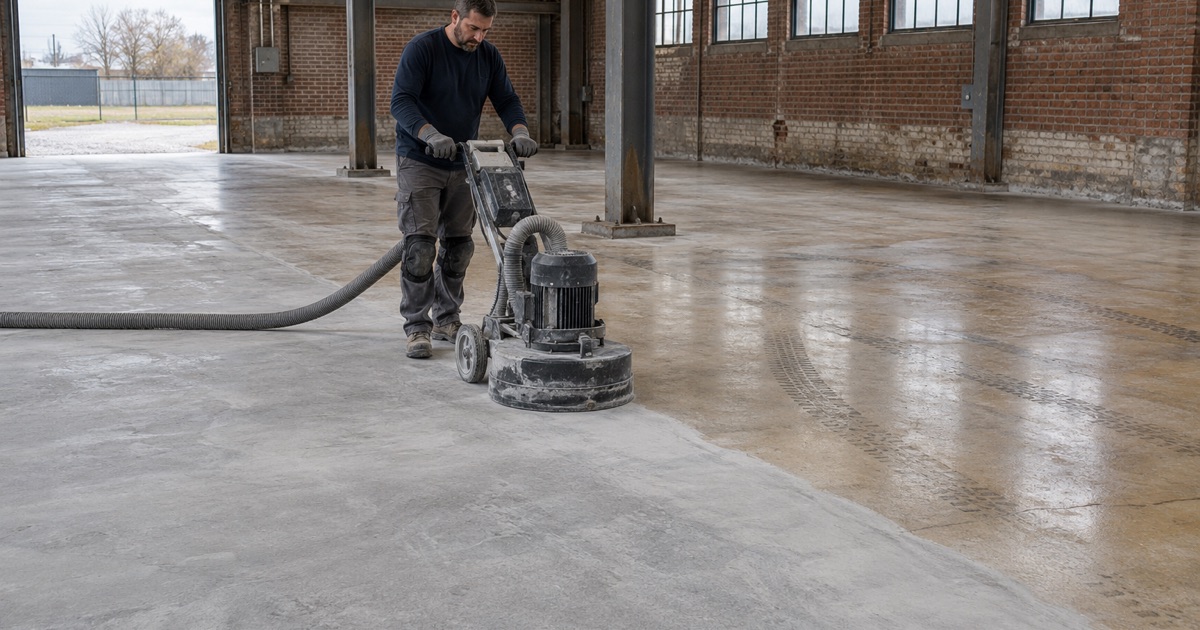
We grind with dust-collecting vacuums attached at the cutting head, and dust and slurry are collected on site and bagged, never washed toward a street drain or the lake. The proposal states the surface profile we are aiming for and the equipment we plan to use.
Why Concrete Grinding Matters
Surface Profile and Coating Bond
The International Concrete Repair Institute describes surface roughness on a scale of concrete surface profiles, from CSP 1, nearly smooth, to CSP 10, very rough. Thin coatings need a fine profile, while thick systems and overlays need a coarser one. Grinding lets us hit the profile the system calls for, rather than guessing.
A coating applied over a profile that is too smooth has little to grip and peels. One applied over a profile too rough for its thickness can show the texture through the finish. Matching the two is part of what keeps a floor bonded for years.
Removing the Weak Top Layer
The top fraction of a troweled slab is often weaker than the concrete below it, a layer called laitance. Coatings bonded to laitance fail when the laitance itself lets go, taking the coating with it. Grinding removes that layer and exposes sound concrete.
Garage slabs add another problem: years of oil, tire residue and salt soak into the surface. Grinding removes much of that contamination, and we address deeper oil stains separately before coating.
Why We Never Acid Etch
Acid etching is cheap and fast, which is why retail kits rely on it. It leaves an uneven, shallow profile, does nothing to sealers or curing compounds, and leaves salts and residue that must be rinsed thoroughly. Water used to rinse it adds moisture to the slab right before coating.
From what we have seen removing failed floors over the years, etched preparation is behind many peeling garage coatings. Mechanical preparation costs more and lasts longer.
What Concrete Grinding Removes
Old Epoxy, Paint and Sealers
Failing epoxy, garage floor paint and acrylic sealers are among the most common things we grind off. Each new coating is only as strong as the layer beneath it, so anything poorly bonded has to come up. Diamond tooling chosen for the material keeps the job efficient and avoids gouging the slab.
Well-bonded epoxy can sometimes be abraded and recoated instead of removed. We test the adhesion of the existing coating before recommending either path.
Mastic, Thinset and Carpet Glue
Basements and commercial spaces often carry old tile mastic, thinset mortar or carpet adhesive. These have to be removed completely before a coating or polish, and some older black mastics call for careful handling. We assess what is on the floor before starting and plan the removal method accordingly.
Efflorescence and Surface Contaminants
The white mineral deposits called efflorescence, along with curing compounds and surface hardeners, prevent coatings from bonding. Grinding removes them, but efflorescence also signals moisture moving through the slab, so we test before choosing the primer.
Grinding Versus Shot Blasting
Diamond Grinding
Diamond grinders use rotating heads fitted with metal- or resin-bonded diamond segments. They remove coatings, flatten minor irregularities and produce a controllable profile. They work well in garages, basements and most commercial spaces, and they handle edges with smaller hand grinders. Grinding is also the first stage of polished concrete, where progressively finer diamonds refine the surface instead of roughening it.
Shot Blasting
Shot blasting fires small steel shot at the floor and recovers it by vacuum, leaving a uniform, textured profile. It is fast on large open floors like warehouses and is often used before thicker coatings and overlays. It does not flatten a floor the way grinding does, and it can leave track marks if not run carefully.
Choosing the Right Method
The right tool depends on the floor, the material being removed and the coating planned. Many projects use both: shot blasting for the open field and diamond grinding at the edges and around obstacles. We specify the method in the proposal so you know how the floor will be prepared.
After the Grind
Repairs and Joint Filling
Once the slab is open, cracks, spalls and pits are easier to see and fill. Repairs are ground flush with the surrounding floor. In commercial slabs, joints are filled with a semirigid filler before coating so forklift wheels do not break the edges.
Moisture Testing
Grinding does not change what is coming up from below. We test for moisture with calcium chloride kits or relative humidity probes and choose a moisture-mitigation primer where readings call for one. In Wisconsin, garage slabs often have no vapor retarder beneath them, so testing is never skipped.
Scheduling Around the Building
Grinding is loud, and even with dust collection, it is disruptive. In commercial buildings we schedule it overnight or on weekends where needed and isolate work areas so the rest of the building keeps running.
For homes, grinding a two-car garage or a basement usually takes part of a day. We cover doorways into the house, keep the vacuums running at the cutting head and leave the space swept and ready for the next step, whether that is our coating or another trade’s flooring.
- 20+ Years on Concrete
- Moisture Tested First
- Written System Proposals